Track & troubleshoot / BNT DOOM GUIDES
Entry Prices, Fees, and Trading Costs
Separate signal-time price, live ask, saved entry limit and actual fill. Understand fee-inclusive budgets and a clearly labeled cost example.
On this page
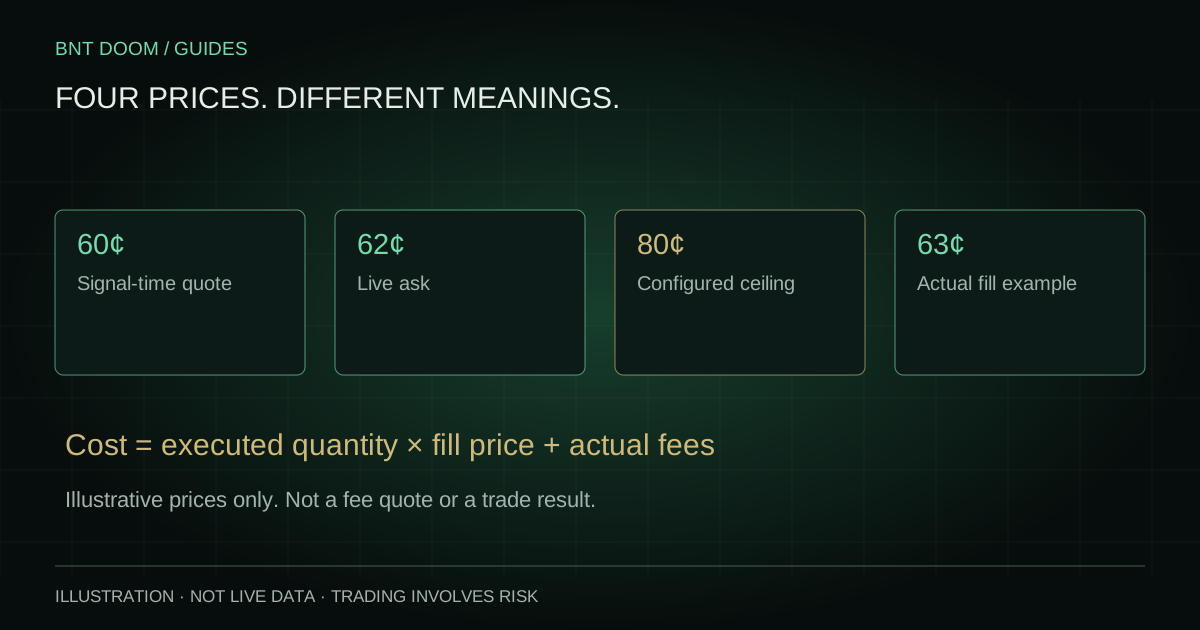
Keep four prices separate
The signal-time price is a snapshot. The live selected-side ask is a current offer. The configured limit is the most you permit per contract. The actual fill price is what the exchange reports for executed quantity. These can all differ during a fast-moving round.
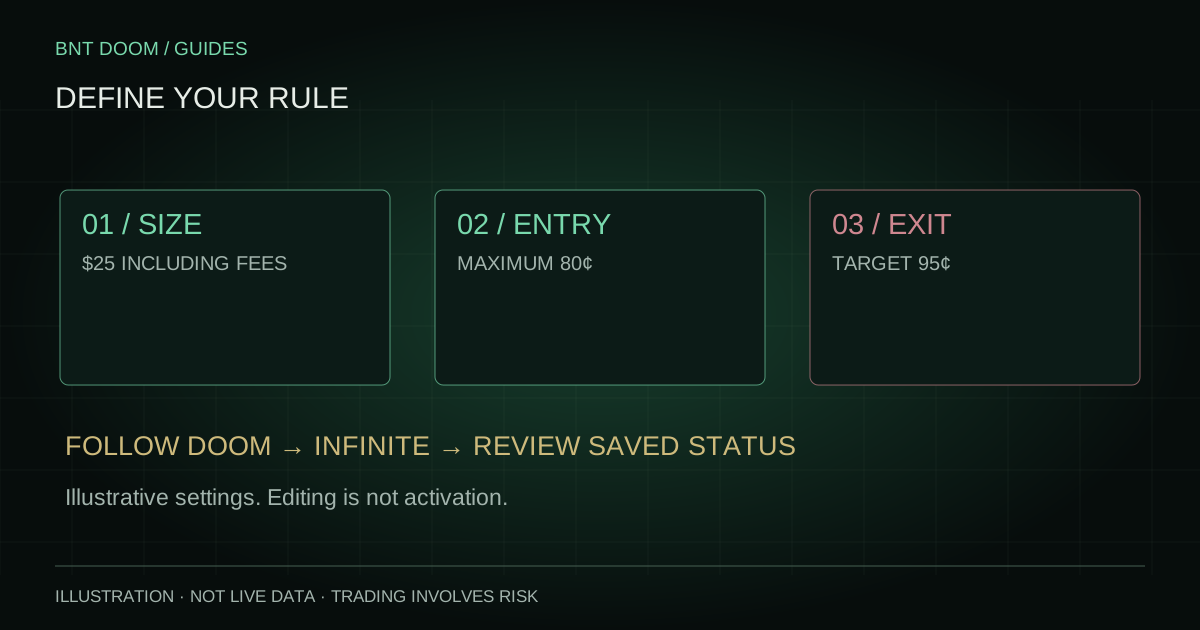
Follow DOOM’s 80¢ entry setting allows execution up to that ceiling; it does not pin the order to the signal print. If the ask rises above the saved cap, the buy is blocked. If it is below the cap, execution still depends on available liquidity and all other checks.
| Illustrative observation | Value | Meaning |
|---|---|---|
| Signal-time quote | 60¢ | Earlier snapshot |
| Live selected-side ask | 62¢ | Current displayed offer |
| Configured ceiling | 80¢ | Maximum permitted price |
| Actual average fill | 63¢ | Example executed price, not a guarantee |
Dollars and contracts are different constraints
Dollars per round including fees sets a fee-aware budget. Requested quantity must fit execution costs rather than an idealized signal price. Contracts per round sets quantity, whose actual cost still needs sufficient market buying power. A dollar budget does not guarantee that every dollar is spent.
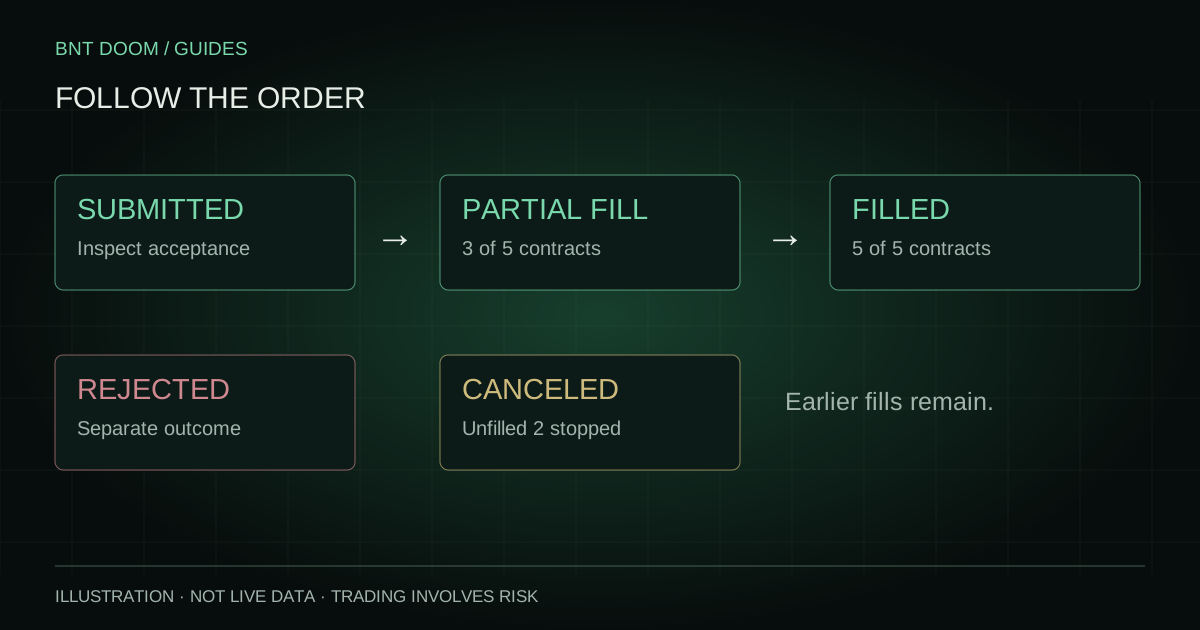
A partial fill can leave part of a budget unused. Reserved funds and the current market’s exchange context can make Available for BTC trading lower than total cash across exchanges. An unavailable balance is not zero and is not permission to assume a larger balance.
A simple cost example
Assume, purely for illustration, that 10 contracts fill at an average of $0.63. Contract cost is 10 × $0.63 = $6.30. If the actual reported entry fees were $0.17, the entry cash outflow would be $6.47. The $0.17 is an explicit teaching assumption, not a Kalshi fee quote or the output of its current fee formula.
If all 10 contracts later sold at $0.75, gross sale proceeds would be $7.50. Assuming another $0.14 of reported exit fees, net proceeds would be $7.36 and the example net gain would be $0.89. Those prices, quantities and fees are invented arithmetic inputs, not a DOOM trade, a customer result or an expected return. A lower exit or a losing settlement can instead produce a loss.
To review your own result, replace every assumption with reconciled fills and actual fees. Do not use the configured 80¢ ceiling as the fill price, and do not describe gross proceeds as profit.
- Entry outflow = filled quantity × average entry price + entry fees.
- Exit proceeds = filled quantity × average exit price − exit fees.
- A completed position’s net result must account for its remaining settlement or exit and all relevant costs.
Check the current exchange schedule
Kalshi’s schedule distinguishes immediately matched trading fees from maker fees on specified markets and lists exceptions or multipliers. Fees can depend on contract price, quantity and the applicable market schedule. Do not assume every market or order pays the same amount, or that a limit order is automatically a maker order.
Use the current official schedule and the exchange’s actual fill records for your contract. The worked example above deliberately uses assumed fees rather than pretending to calculate a binding quote. BNT access arrangements and exchange trading costs are separate.
A target is not realized profit
A sell target is a condition for an attempted exit. The bid must meet it, holdings must be available, and liquidity must support the quantity. A partial or canceled exit can leave an open position. Spread and timing can therefore affect results even when the directional call was correct.
Open Trade History to distinguish order limit, actual average fill, fees and net cash movement. An unavailable figure is better left unavailable than estimated from the requested price.
Sources and verification
Product controls checked against the current implementation. Official exchange sources reviewed on 25 September 2026; the specific market’s rules and current fee schedule remain authoritative.